Unseen Gwangju: Where Local Life Meets Leisure Magic
You know that feeling when you stumble upon a city that’s not in every travel guide, but somehow feels more real? That’s Gwangju. I went looking for quiet cafes and green spaces between the mountains and found a side of Korea most tourists miss — authentic, relaxed, and full of soul. This isn’t just another K-pop city; it’s where culture breathes slowly. Nestled in the southwest corner of South Korea, Gwangju offers a rare blend of artistic depth, natural serenity, and everyday charm. It’s a place where leisure isn’t scheduled, but lived — in morning strolls, in steam rising from hand-poured coffee, in murals that whisper stories of resilience and creativity. For travelers seeking connection over checklist tourism, Gwangju is a quiet revelation.
Why Gwangju Stands Out in Korea’s Travel Scene
Gwangju occupies a unique space in South Korea’s urban landscape. While Seoul pulses with energy and Busan thrives along the coast, Gwangju unfolds at a gentler rhythm, shaped by its history, geography, and cultural identity. Often referred to as the country’s cultural capital, it has long been a center for art, education, and progressive thought. Unlike more commercialized cities, Gwangju maintains a low tourist footprint, allowing visitors to experience daily life without the filters of mass tourism. This authenticity is not accidental — it’s woven into the city’s identity through decades of community-driven initiatives and a deep respect for local traditions.
What sets Gwangju apart is its balance between modernity and rootedness. High-speed rail connects it seamlessly to major hubs, yet within its neighborhoods, life unfolds with a deliberate slowness. Residents gather in neighborhood plazas, children play near tree-lined avenues, and elders sip barley tea outside corner shops. The city’s commitment to sustainability and public well-being is evident in its urban planning — wide pedestrian paths, abundant green belts, and a network of bike lanes invite movement without haste. This intentional design fosters leisure not as an indulgence, but as a natural part of daily existence.
For travelers, this means immersion without overwhelm. There are no overwhelming crowds at landmarks, no pressure to rush from one attraction to the next. Instead, Gwangju rewards curiosity and presence. Whether exploring its art galleries, hiking the foothills of Mudeungsan, or sharing a meal at a family-run restaurant, visitors encounter a version of Korea that feels both timeless and refreshingly current. In a country often associated with speed and innovation, Gwangju reminds us that there is profound value in stillness, in listening, in simply being.
The Heartbeat of the City: Parks and Riverside Escapes
If Gwangju has a heartbeat, it pulses in its parks and along its waterways. These green sanctuaries are not afterthoughts — they are central to how residents live and relax. Mudeungdae Park, nestled at the base of Mudeungsan Mountain, is more than a recreational space; it’s a destination for renewal. Early mornings here are filled with the soft sounds of tai chi practitioners moving in unison, joggers following shaded trails, and families spreading blankets under ginkgo trees. The park’s network of well-maintained paths ranges from gentle slopes to more challenging climbs, making it accessible to all ages and fitness levels.
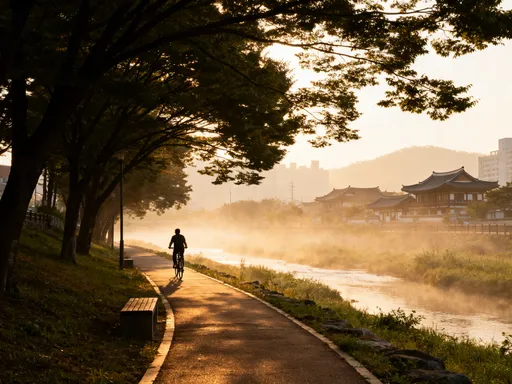
Equally beloved is the Yeosu Stream area, a revitalized urban waterway that winds through the heart of the city. Once an overlooked drainage channel, it has been transformed into a scenic corridor lined with willow trees, stone bridges, and quiet benches. In spring, cherry blossoms frame the water like delicate lace; in autumn, golden leaves drift slowly to the surface. Locals come here to walk, to read, or simply sit and watch the light shift across the ripples. It’s not unusual to see grandparents pushing strollers, students studying under umbrellas, or couples sharing quiet conversations on weekend afternoons.
These spaces are more than beautiful — they are vital to the city’s emotional well-being. Studies have shown that access to green environments reduces stress and improves mental clarity, and in Gwangju, this knowledge is embedded in daily life. The city’s investment in park maintenance, clean waterways, and safe walking routes reflects a belief that leisure and health are interconnected. For visitors, spending time in these areas offers more than scenic views; it provides insight into how a community prioritizes peace, connection, and balance. A single morning walk along the stream or a picnic in Mudeungdae can shift one’s entire perspective on what travel can offer.
Café Culture Beyond the Hype
In Gwangju, coffee is not just a beverage — it’s a ritual, a pause, a moment of reflection. The city’s café scene thrives not on global franchises, but on independent spaces that reflect the personalities of their owners and the character of their neighborhoods. Tucked into quiet alleys or perched on gentle hillsides, these cafés are designed for lingering. You won’t find timers on tables or pressure to vacate after one drink. Instead, patrons are welcomed to stay for hours, sipping slowly, reading books from curated shelves, or sketching in notebooks as sunlight filters through large windows.
What makes these cafés special is their attention to detail. Many source beans from small Korean roasters, offering pour-overs with tasting notes that highlight floral, nutty, or citrus undertones. Pastries are often made in-house — think red bean scones, matcha financiers, or honey-lavender cakes — crafted with seasonal ingredients. Some cafés integrate art displays, rotating local photography or ceramic works, turning each visit into a multi-sensory experience. Others offer mountain views from their terraces, where the scent of pine mingles with the aroma of freshly ground coffee.
For travelers, discovering these spaces requires stepping away from algorithm-driven recommendations. While social media may spotlight a few ‘instagrammable’ spots, the true gems are often found by wandering residential streets, following the sound of soft jazz, or noticing a hand-painted sign tucked behind flowering vines. Asking a local shopkeeper for their favorite café often leads to warm smiles and handwritten directions. This culture of discovery mirrors the city’s broader ethos — that the best experiences are not rushed, but uncovered with patience and openness. In Gwangju, a perfect café moment isn’t about the photo — it’s about the quiet joy of being present.
Art as Recreation: Museums and Street Murals
Gwangju’s artistic spirit is not confined to galleries — it spills into the streets, parks, and alleyways, transforming the city into an open-air canvas. As the host of the Gwangju Biennale, one of Asia’s most respected contemporary art events, the city has cultivated a deep relationship with creative expression. But unlike biennales in more commercial cities, Gwangju’s art scene feels accessible, even intimate. It’s not about spectacle, but about dialogue — between artist and viewer, past and present, individual and community.
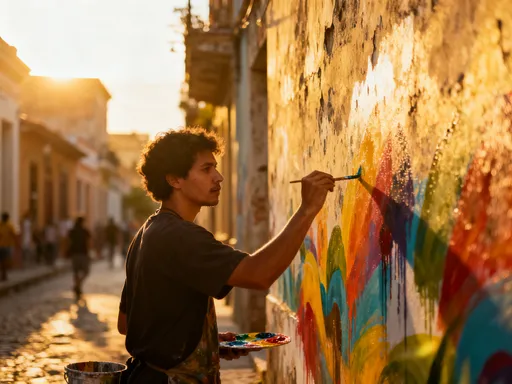
Walking through older districts like Jeonil-dong or Chungjang-ro, visitors encounter vibrant murals that tell stories of the city’s history, its people, and its hopes. Some depict scenes from the 1980 democratic movement, rendered with dignity and grace; others celebrate everyday life — children playing, market vendors, blooming camellias. These works are not tourist attractions in the traditional sense; they are part of the neighborhood’s fabric, painted with community input and maintained with pride. Locals often point them out to visitors, sharing the meanings behind symbols or the names of the artists involved.
Indoor spaces offer equally meaningful experiences. The Gwangju Museum of Art features rotating exhibitions that blend Korean and international works, often with a focus on social themes and environmental awareness. Smaller galleries, like those in the Art Village near Mudeungsan, host interactive installations where visitors can contribute to evolving artworks or participate in guided meditation sessions among sculptures. Here, art is not passive — it invites touch, thought, and emotional response. For families, many venues offer workshops where children can paint, sculpt, or create collages inspired by what they’ve seen. In Gwangju, engaging with art isn’t reserved for experts; it’s a form of leisure available to everyone.
Choosing the Right Spots: A Local’s Perspective
One of the joys of visiting Gwangju is learning to move through the city like a resident — not by cramming in attractions, but by aligning activities with mood and moment. Locals often speak of “matching energy” — choosing where to go based on how they feel. A bright, crisp morning might call for a walk through Mudeungdae Park, where the air is cool and the light is soft. The same afternoon could be perfect for café hopping in the Seo-gu district, where quiet streets are dotted with cozy spaces perfect for reading or journaling.
Evening offers its own rhythm. As temperatures drop, families gather along the Yeosu Stream, where solar-powered lamps cast a gentle glow on the water. Some bring portable stools and thermoses of sweet persimmon tea, settling in for unhurried conversation. Others head to cultural centers that host regular performances — traditional music, modern dance, or storytelling sessions — often free or low-cost. These events are well-attended by locals, creating a warm, inclusive atmosphere for visitors who want to observe or participate.
Accessibility plays a key role in this ease of movement. Gwangju’s public transportation system is efficient and clean, with buses connecting major neighborhoods and park entrances. Many destinations are also within walking distance of each other, especially in the central districts. Signage is clear in both Korean and English, and staff at tourist information centers are helpful and patient. For those with limited time, even a single day can feel rich and immersive if planned with intention — focusing on one area, moving slowly, and allowing space for unexpected discoveries. The goal is not to see everything, but to feel the city’s pulse.
Seasonal Shifts: When and Where to Go
Gwangju’s charm evolves with the seasons, each offering a distinct palette of experiences. Spring, from March to May, is perhaps the most enchanting. Cherry blossoms bloom along the Yeosu Stream and in Mudeungdae Park, drawing locals for picnics and quiet contemplation. The air carries the scent of fresh grass and blooming azaleas, and temperatures are mild — ideal for long walks or outdoor café visits. This is also the season of the Gwangju Biennale, when the city buzzes with creative energy and special events.
Summer, while warmer, brings its own rewards. Early mornings and late evenings remain pleasant, especially at higher elevations. Hiking trails on Mudeungsan Mountain offer shaded paths, cool breezes, and views of mist rising from the valleys. Waterfalls like Soswaewon and Wonhyo Falls become popular destinations for families seeking relief from the heat. Indoor spaces — museums, libraries, and air-conditioned cafés — provide welcome retreats during midday hours, often hosting seasonal exhibitions or reading programs.
Autumn, from September to November, transforms the city into a tapestry of gold and crimson. Ginkgo trees lining the streets turn bright yellow, and fallen leaves create a soft carpet underfoot. This is a favorite time for photography, quiet reflection, and enjoying seasonal foods like roasted chestnuts and persimmon pancakes. Winter, though chilly, has a quiet beauty. While snowfall is light, the city embraces warmth through tea houses, heated indoor gardens, and seasonal markets offering handmade crafts and hot soups. Throughout the year, Gwangju remains uncrowded compared to other Korean cities, allowing visitors to enjoy each season’s gifts without the stress of long lines or packed spaces.
Beyond the Guidebook: Crafting Your Own Gwangju Experience
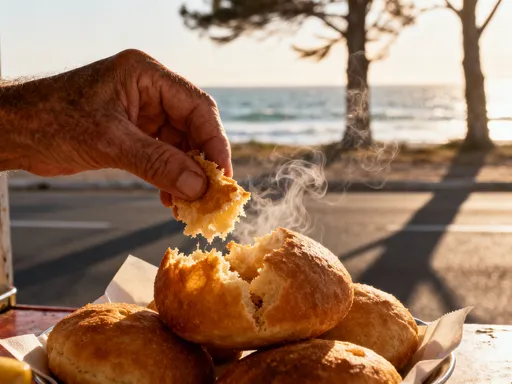
The true magic of Gwangju lies not in any single attraction, but in the freedom to create a personal rhythm. This is a city that rewards slowness, that invites you to put away the itinerary and listen. Imagine starting your day with a warm oatmeal bun from a corner bakery, then finding a bench by the stream where you watch ducks glide across the water. Later, you might wander into a small gallery, spend an hour sketching a mural, or share a pot of barley tea with a local who offers stories about the neighborhood.
These moments — small, unscripted, deeply human — are the essence of leisure in Gwangju. They remind us that travel is not just about seeing new places, but about feeling them. It’s about allowing space for quiet, for connection, for the kind of rest that renews the spirit. In a world that often measures worth by productivity, Gwangju offers a different message: that time spent in stillness, in beauty, in simple presence, is never wasted.
So come not to check off landmarks, but to breathe. Let the city guide you not through schedules, but through sensation — the crunch of leaves underfoot, the warmth of a handmade cup, the sound of wind through bamboo. Let yourself be curious, open, unhurried. In doing so, you won’t just visit Gwangju — you’ll carry a piece of its quiet magic with you long after you’ve left.